Selected work
These case studies show not just what we delivered — but how we think, what decisions we made, and why. Because the process is part of the value.
A frontline family violence organisation needed a suite of eLearning modules that could reach workers across diverse cultural backgrounds, varied English literacy levels, and different devices — including workers who had never engaged with digital learning before. The content was sensitive, complex, and had to be trauma-informed from the ground up.
7
Modules delivered in English
100%
WCAG accessibility compliant
3
AI avatar presenters created
1
LMS migration completed
The challenge
The organisation had rich, important content — developed over years by subject matter experts in family violence, trauma-informed practice, and culturally responsive service delivery. But it existed in long documents, dense PDFs, and in-person sessions that weren't accessible to all staff.
Workers came from over 30 cultural backgrounds. Many had limited English literacy. Most hadn't engaged with eLearning before. And the topics — family violence, trauma, cultural safety — required exceptional care in how they were designed and presented.
The existing LMS (eSkilled) wasn't fit for purpose and couldn't support the kind of accessible, engaging experience the organisation needed.
Content locked in documents
Years of expert knowledge sat in PDFs and Word docs — inaccessible, hard to update, and impossible to track.
Culturally diverse workforce
Workers from 30+ cultural backgrounds with varying English literacy levels needed learning that genuinely included them.
LMS not fit for purpose
The existing platform couldn't support accessible design, didn't track completion reliably, and frustrated learners.
The approach
The guiding principle was simple: if the most linguistically and digitally excluded worker in the organisation could complete the training with confidence, everyone else would be fine. Accessibility wasn't a checkbox — it was the design brief.
01
Content audit & plain language rewrite
Every module started with a content audit. Complex policy language was rewritten in plain English — short sentences, active voice, no jargon. Where technical terms were necessary, they were defined in context. The goal was Grade 6 reading level without losing meaning.
02
AI avatar design with cultural intentionality
Using HeyGen, we created AI avatar presenters that reflected the cultural diversity of the workforce. Script writing was critical — avatars spoke conversationally, not like documents. Tone, pacing, and pauses were scripted deliberately to support comprehension for non-native English speakers.
03
Accessible build in Articulate Rise
Modules were built in Articulate Rise with full WCAG accessibility — alt text on every image, captions on every video, keyboard navigation, and high-contrast visual design. Every interaction was tested for screen reader compatibility. No learner would be excluded by a design choice.
04
LMS migration from eSkilled to Arlo
The organisation moved from eSkilled to Arlo — a platform better suited to hybrid training management. The migration included setting up course structures, user groups, completion tracking, and manager reporting dashboards. Staff were trained on the new system before go-live.
05
Trauma-informed design review
Every module was reviewed through a trauma-informed lens before final delivery. This meant checking for triggering language, ensuring content warnings were placed appropriately, and making sure learners always felt in control of their pace through the material.
The work
Add a screenshot or screen recording of your eLearning module here
Recommended: 1200×675px
Module interface — Articulate Rise with AI avatar presenter
Add a screenshot of your HeyGen avatar here
600×600px
AI avatar presenter — HeyGen
"The modules feel like they were designed for us — not just translated from a policy document. Our staff actually complete them."
— Program Manager, Family Violence Sector
What I learned
Script writing is the most important part of avatar work. An avatar reading a policy document is worse than no avatar. The script has to sound human — which means writing it out loud first.
Accessibility unlocks engagement. When we removed barriers for the most excluded learners, completion rates improved across the entire workforce — not just for those with accessibility needs.
Plain language is a design skill. Rewriting complex content in plain English takes more time than building the module. It needs to be scoped and budgeted properly from the start.
LMS migration needs a change management plan. The technical migration was straightforward. Getting staff to trust and use the new system required communication, training, and visible leadership support.
If I did it again
I'd build a pilot module and test it with 3–5 real learners before building the remaining six. The feedback would have shaped the design from day one.
I'd involve community members earlier in reviewing language and cultural tone — not just at the end as a quality check.
I'd set up a 90-day post-launch check-in with managers to capture behavioural change data, not just completion data.
A homelessness org needed more than eLearning modules — they needed an entire learning infrastructure that could support hybrid training (online and offline), be managed by an internal team, and grow with the organisation. The project involved designing the system, building the content, migrating the LMS, and training an in-house staff member to own it all.
1
Staff member trained to manage the full system
2
LMS platforms — migrated and configured
Hybrid
Online + offline delivery fully supported
∞
Ongoing capacity — they own it now
The challenge
A homelessness org supports people experiencing homelessness across Melbourne. Their workforce is diverse, their work is complex, and their training needs span everything from frontline casework to leadership development.
The challenge wasn't just building eLearning — it was building a learning ecosystem that could support training that happened online, in person, and in blended formats. And critically, the organisation needed to be able to run it themselves after the project ended, without ongoing reliance on external consultants.
There was also a real tension in the brief: staff were time-poor, working in a high-pressure sector, and skeptical of digital learning that felt disconnected from their day-to-day reality.
Hybrid delivery — no existing framework
Training happened face-to-face, online, and in combination — but there was no system for managing or tracking all three cohesively.
No internal eLearning capability
The organisation had no one who could build or manage eLearning. Every piece of content required external help — expensive and slow.
High-pressure context
Frontline workers in homelessness services are time-poor and mission-driven. Training needed to respect their time and feel relevant to their actual work.
The approach
This project had three parallel tracks running at the same time — which required careful sequencing and close collaboration with the internal team throughout.
Track 1 — System design & LMS migration
01
Learning needs analysis
Before touching any tool, we mapped the organisation's full training landscape — what existed, what was missing, who needed to learn what, and how hybrid delivery actually worked in practice across different teams and locations.
02
Hybrid learning framework design
We designed a framework that clearly defined what would live online (self-paced modules, resource libraries, assessments), what would stay face-to-face (practice-based workshops, team debriefs), and how the two would connect — so learners had a coherent experience across both modes.
03
LMS migration — eSkilled to Arlo
Arlo was selected for its ability to manage both online and face-to-face session registrations in one platform. The migration included transferring existing course data, configuring user roles, setting up automated notifications, building reporting dashboards, and testing the full learner journey before go-live.
Track 2 — eLearning development
04
Content design for the homelessness context
Modules were designed for workers who understand homelessness intimately but don't always have time for long training. Content was scenario-based, grounded in real situations, and short — most modules ran 15–25 minutes. Every scenario was reviewed by frontline staff for authenticity before build.
05
Visual design system for digital and print
Because training happened across online and offline formats, we built a visual design system that worked in both — consistent colour, typography, and layout for eLearning modules, printed facilitator guides, and PowerPoint slides used in face-to-face sessions.
Track 3 — In-house capability building
06
Training the trainer — eLearning and LMS
A dedicated staff member was identified to own the learning system going forward. We ran a structured capability-building program: working alongside them on each module build, transferring skills progressively rather than through one-off training sessions. By the final module, they were building independently with me reviewing.
07
Documentation and handover
Everything was documented — how to build modules in Articulate, how to manage courses in Arlo, how to run reporting, how to update content. The organisation received a practical operations guide, not a technical manual. It was written for the person doing the job, not an IT department.
The work
Add a screenshot of the Arlo LMS setup here
600×800px
Arlo LMS — hybrid session management
Add a screenshot of an eLearning module here
600×800px
eLearning module — Articulate Rise
Add a photo or scan of a facilitator guide here
600×800px
Facilitator guide — print-ready design
"We went from having no internal capacity to build or manage our training, to having a team member who owns the whole system. That's the outcome we actually needed."
— People & Culture Lead, homelessness org
What I learned
Capability transfer is a design project, not a training session. Teaching someone to build eLearning by working alongside them on real projects is fundamentally different — and more effective — than running a workshop about it.
Hybrid doesn't mean doing everything twice. The framework had to be clear about what belonged online and what belonged in person — and why. When that logic was visible, learners trusted the design.
Frontline workers need training that respects their intelligence. Scenario-based content that treats workers as professionals — not as people who need to be told the obvious — gets completed and remembered.
Documentation written for the person doing the job is the most valuable handover asset. Not technical specs — practical, step-by-step guides written in plain language for a non-technical audience.
If I did it again
I'd map the capability transfer plan in detail at the start of the project — not assume it would happen naturally alongside the content work.
I'd run a hybrid learning pilot with one team before rolling out the full framework — to test the logic of what's online vs in-person before it's set.
I'd build the operations guide as we went, not as a final deliverable — so it captured real decisions as they were made, not just the final state.
Disability Services · Bridgeway
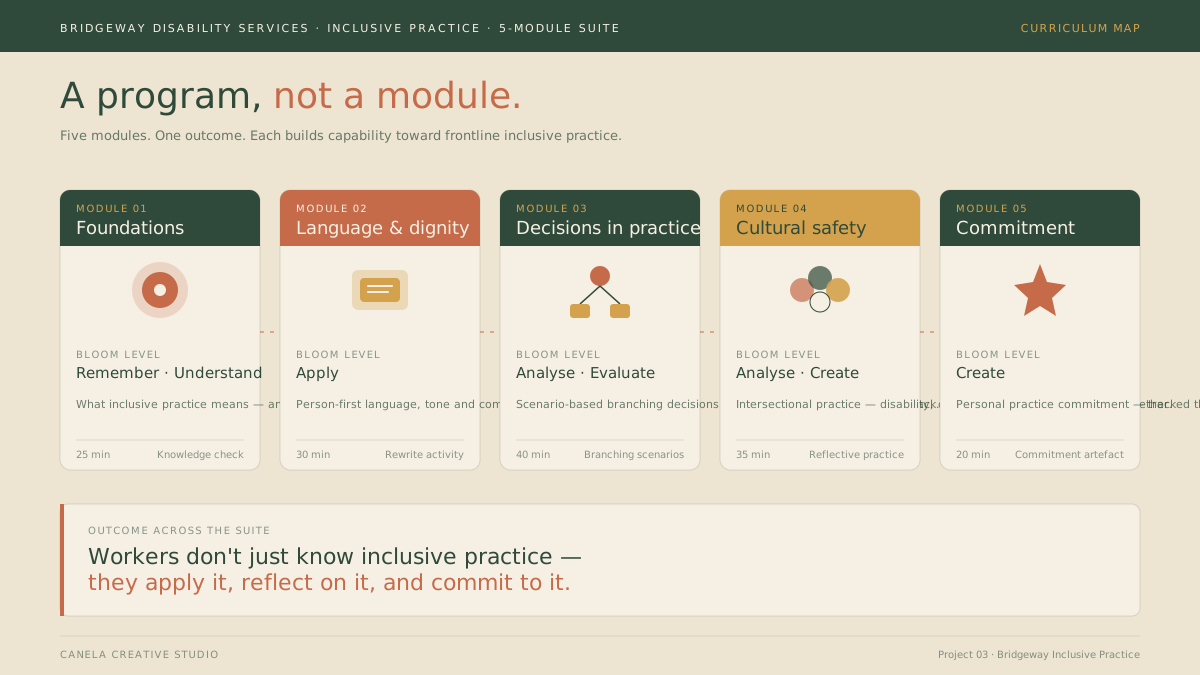
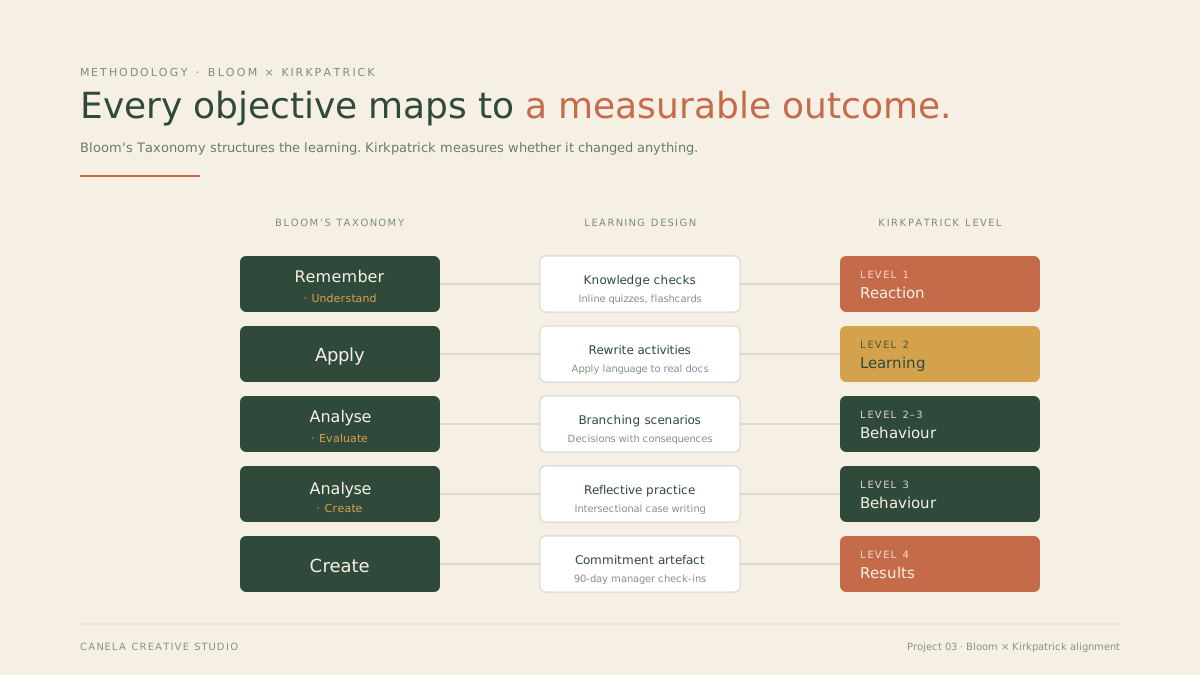
Bridgeway didn't need another 45-minute tick-box. They needed frontline workers to actually change practice — to apply inclusive principles in real casework, not pass a quiz. We designed a 5-module suite built on Bloom's Taxonomy and Kirkpatrick evaluation from the brief up.
The challenge
The existing training was a single 45-minute module. Workers completed it, scored well on the quiz, and practice didn't change. The organisation didn't have a knowledge problem — it had a transfer problem. People knew the principles. They weren't applying them in real work.
On top of that, the concept of "inclusive practice" in disability services needed to hold together things that often get treated separately — person-first language, cultural safety, intersectional identity, and day-to-day decision-making. A single module couldn't do that work.
The approach
We designed the suite as a deliberate progression up Bloom's Taxonomy — from remembering terminology in Module 1, to creating a personal practice commitment in Module 5. Every learning objective was mapped to a Kirkpatrick evaluation level before build, so measurement was designed in, not tacked on.
The outcome
The real measurement wasn't in Module 5. It was in the 90-day manager check-in, where workers brought their commitment artefact back and described a specific decision they'd made differently. That's Kirkpatrick Level 4 — results — and it was baked into the design from the start.
"The language module alone changed how our team writes case notes. That's six years of habit shifted in a few hours. We didn't know that was possible." — Practice Lead, Bridgeway Disability Services
What I learned
Bloom and Kirkpatrick do different jobs. Bloom structures the learning. Kirkpatrick measures whether it changed anything. Aligning them before build — not after — is what makes the program actually work.
Commitment artefacts outperform assessments. A one-sentence practice commitment the learner writes themselves, then reviews with their manager 90 days later, is worth more than any quiz.
Intersectionality belongs in the middle of the program, not at the end. Putting cultural safety in Module 4 — after language and decisions — meant learners had the vocabulary and reflective practice to actually engage with it.
CALD Communities · Workplace Safety
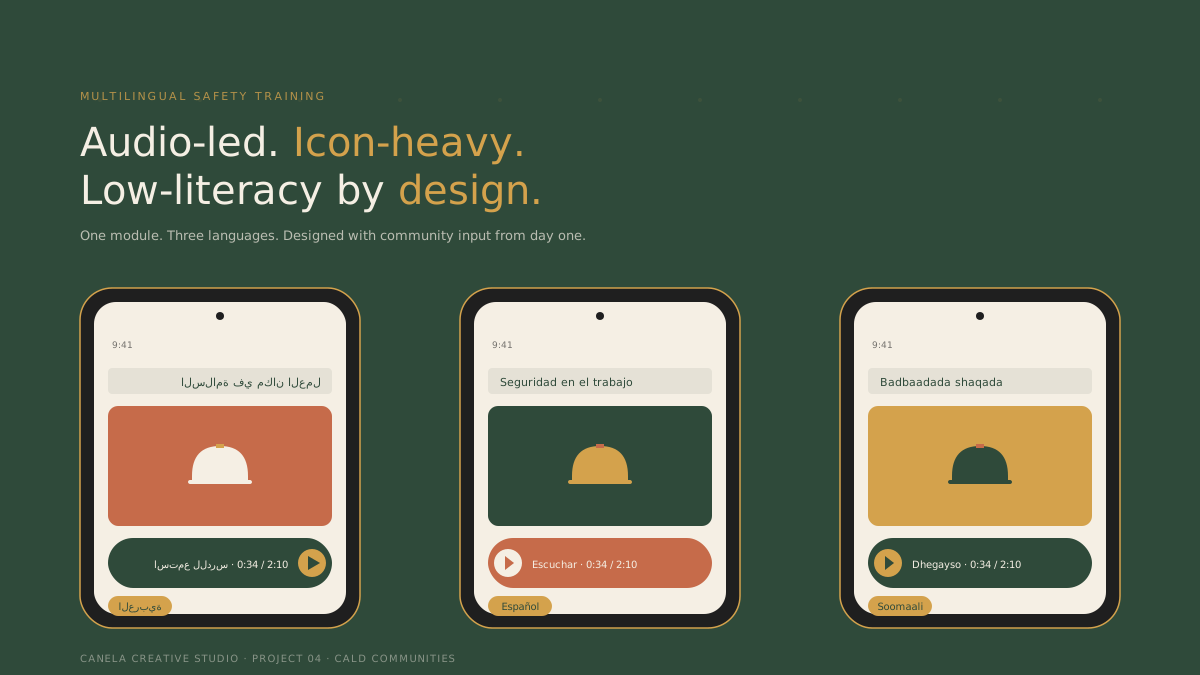
One module. Three languages. Designed with community input from day one — not translated from an English original.
Challenge
Translation alone doesn't create cultural safety. Workers from CALD communities were completing English safety training in name only — literacy and cultural framing left real safety risks on the floor.
Approach
Audio-first scripting in community-led sessions. Icons tested with speakers of each language before build. RTL layout properly handled for Arabic — not a mirrored afterthought.
Outcome
Completion rates matched English-first staff for the first time. Plain-language script structure was reused across three follow-up modules.
Tools: Articulate Rise · HeyGen (multilingual avatars) · community co-design sessions
Rooted Ground NGO · Community Wellbeing
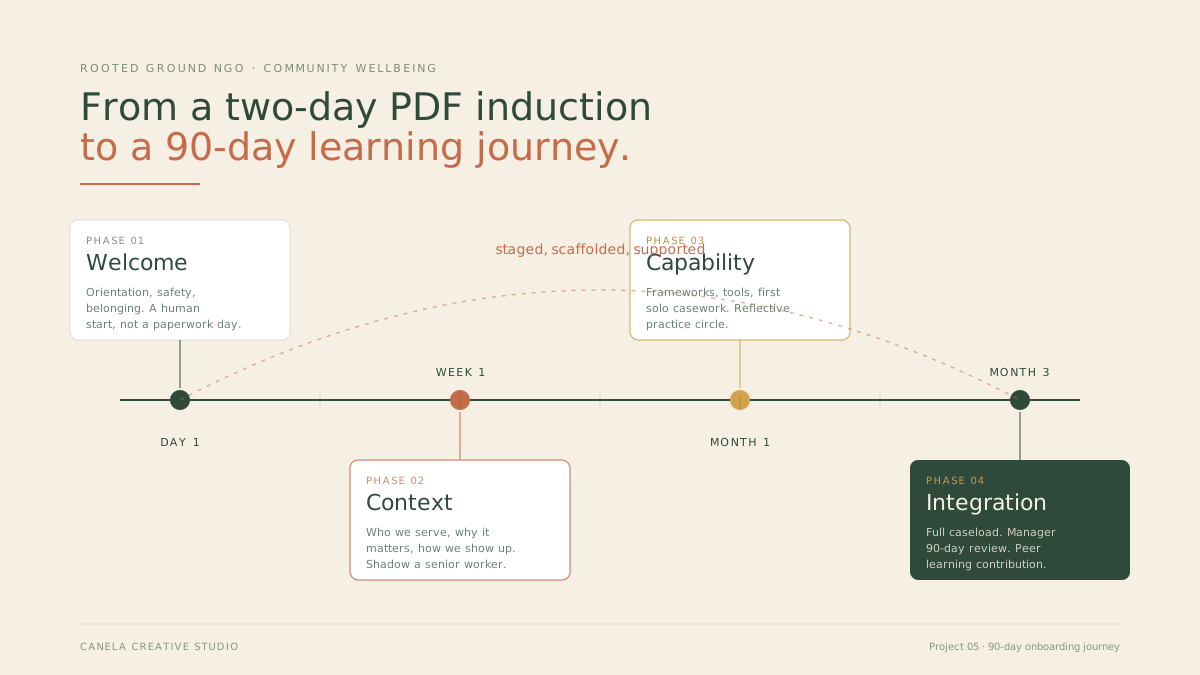
A western-suburbs NGO had a staff turnover problem dressed up as an onboarding problem. We redesigned induction as a staged 90-day learning arc — Welcome, Context, Capability, Integration — rather than a document dump on day one.
Challenge
New staff were overwhelmed on day one, underwhelmed by week two, and often gone within the first year. The problem wasn't the content — it was the cadence.
Approach
Four phases, each with a clear purpose and its own learning artefact. Frameworks and tools delayed until Month 1, when workers had the context to use them. Reflective practice circles built into Month 3.
Outcome
First-year retention lifted meaningfully, and managers reported new staff asking sharper questions earlier — a proxy for faster integration.
Tools: Notion learner portal · Articulate Rise · Canva facilitator materials
Canela Studio · Interactive Experience
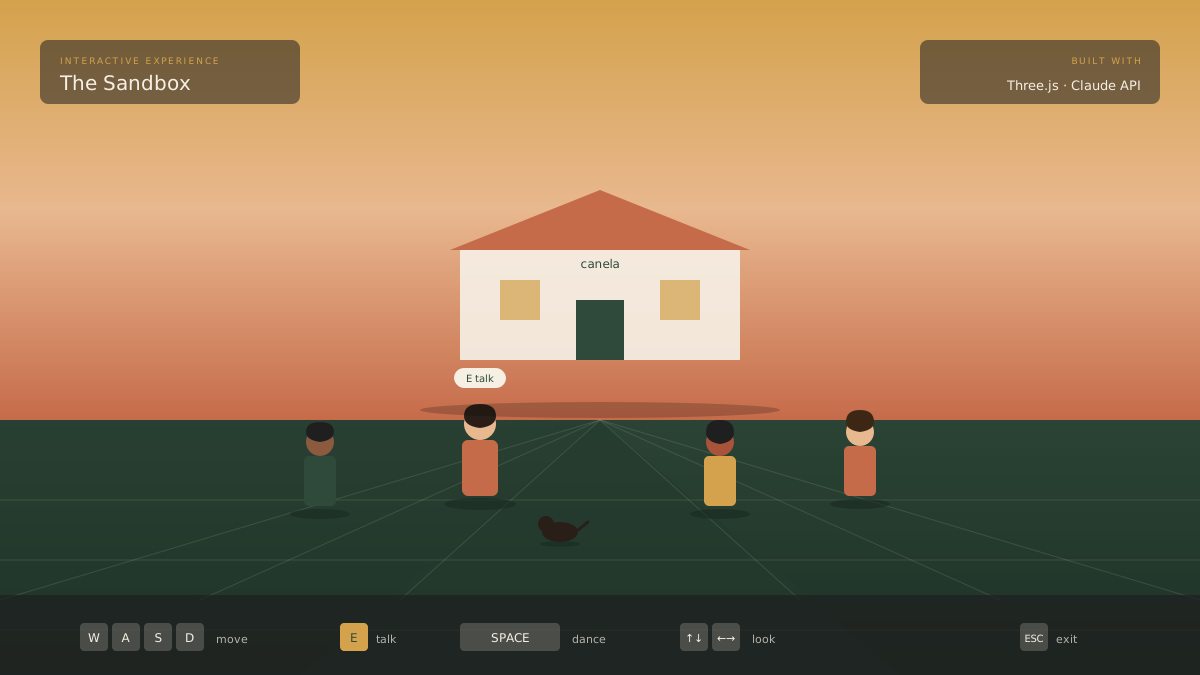
The Sandbox is the studio's own portfolio piece — a navigable 3D world where visitors meet me, Layla the cat, and six thinkers who shape the practice. Built with Three.js and Claude for real conversations. It lives on the homepage.
Why it exists
Learning design is a hard thing to show on a flat page. The Sandbox turns the studio's values — intellectual lineage, warmth, play — into something you experience, not read about.
What's inside
Eight characters. WASD navigation. Press E to start a conversation with any figure — bell hooks, Audre Lorde, Paulo Freire, Kimberlé Crenshaw, Angela Davis, Gloria Anzaldúa, Saida, or Layla.
Build
Three.js for the 3D world. Claude API for the character conversations. Hand-built character rigs, lightweight enough to run smoothly in the browser.
Tools: Three.js · Claude API · Blender · custom shader work
Safeguarding · Social Sector
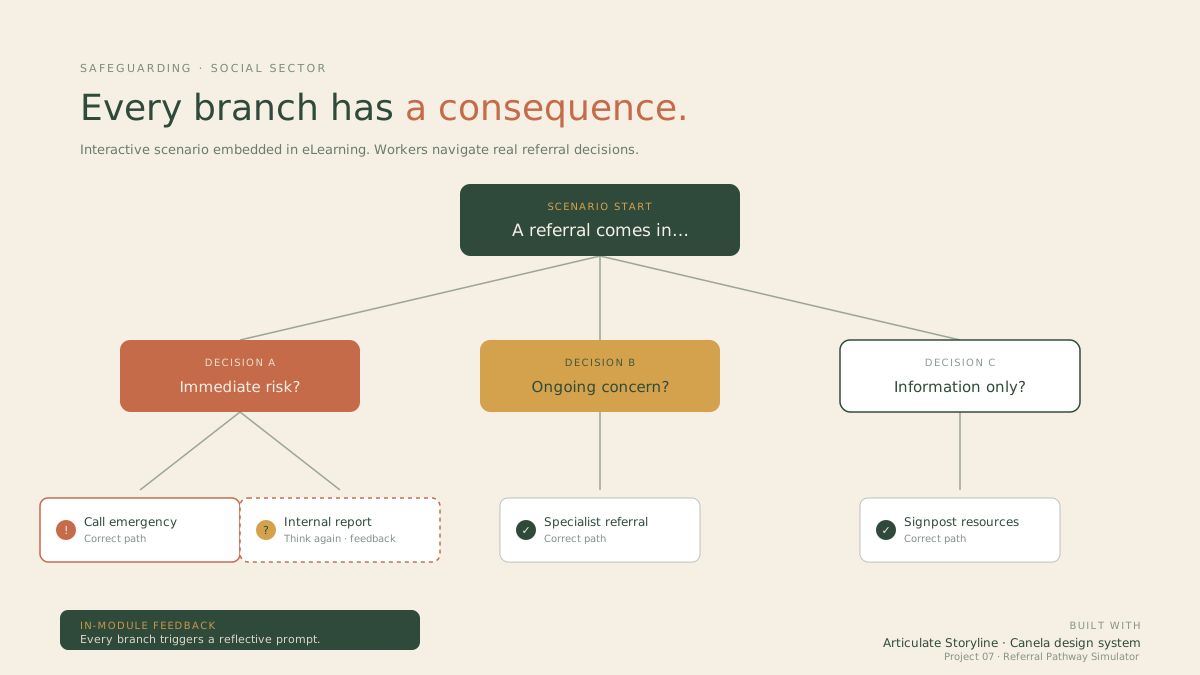
A decision-tree scenario embedded inside a safeguarding eLearning module. Workers navigate real referral decisions — with feedback and consequences at each branch — instead of picking A, B, or C on a knowledge check.
Challenge
Safeguarding training taught workers what the referral thresholds were, but not how to apply judgment under pressure. High-stakes decisions deserve better than multiple choice.
Approach
A multi-level branching scenario where each decision unlocks the next — and every branch, right or wrong, triggers a reflective feedback prompt before the path continues.
Outcome
Workers reported engaging with the scenarios more than once. "Think again" paths were the most-used feature — which is exactly what you want in safeguarding training.
Tools: Articulate Storyline · Canela design system
Disability Communications
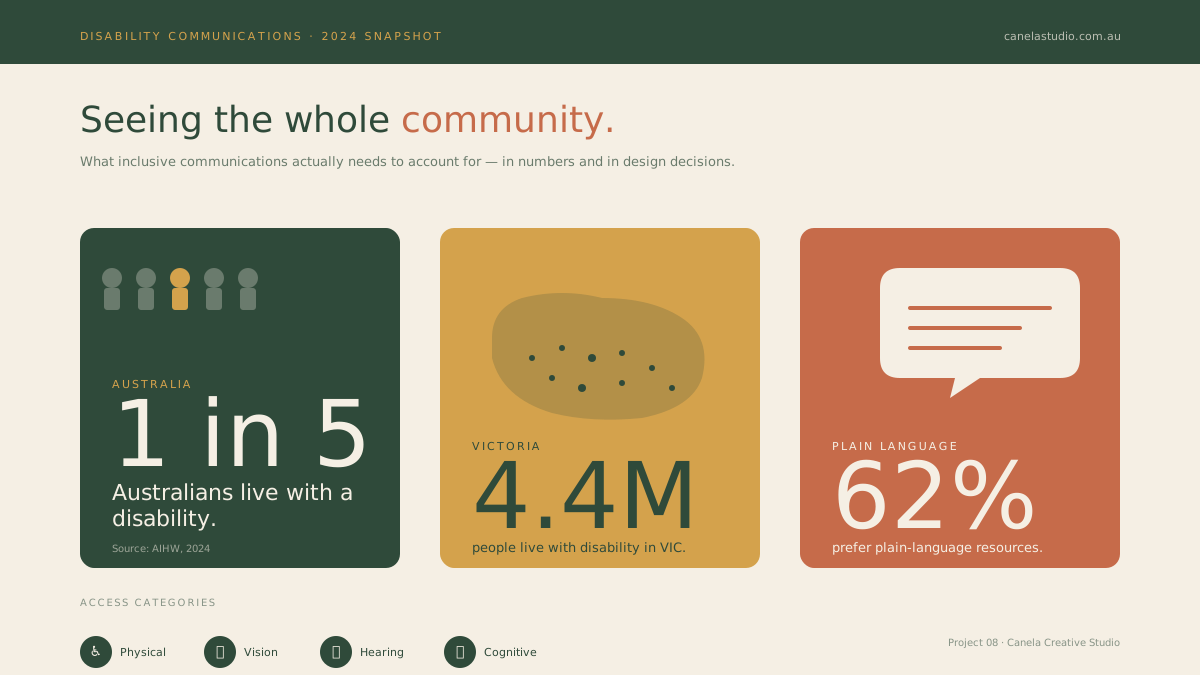
A single-screen infographic using the Canela palette — forest green, terracotta, gold — with accessible icon language. Designed for digital social distribution and print handouts from the same source file.
Challenge
Existing disability sector infographics treated people as data points. The brief was to visualise the same statistics in a way that felt human, readable at a glance, and still held up at A3 print size.
Approach
SVG-first build. Three hero stats, one per panel, with iconography tested for recognition across literacy levels. Accessibility icons pulled into a legible system rather than decorative flourish.
Outcome
Used in two disability service annual reports and an advocacy campaign — same source file, different output sizes, no re-build needed.
Tools: Figma · SVG · Canela brand system
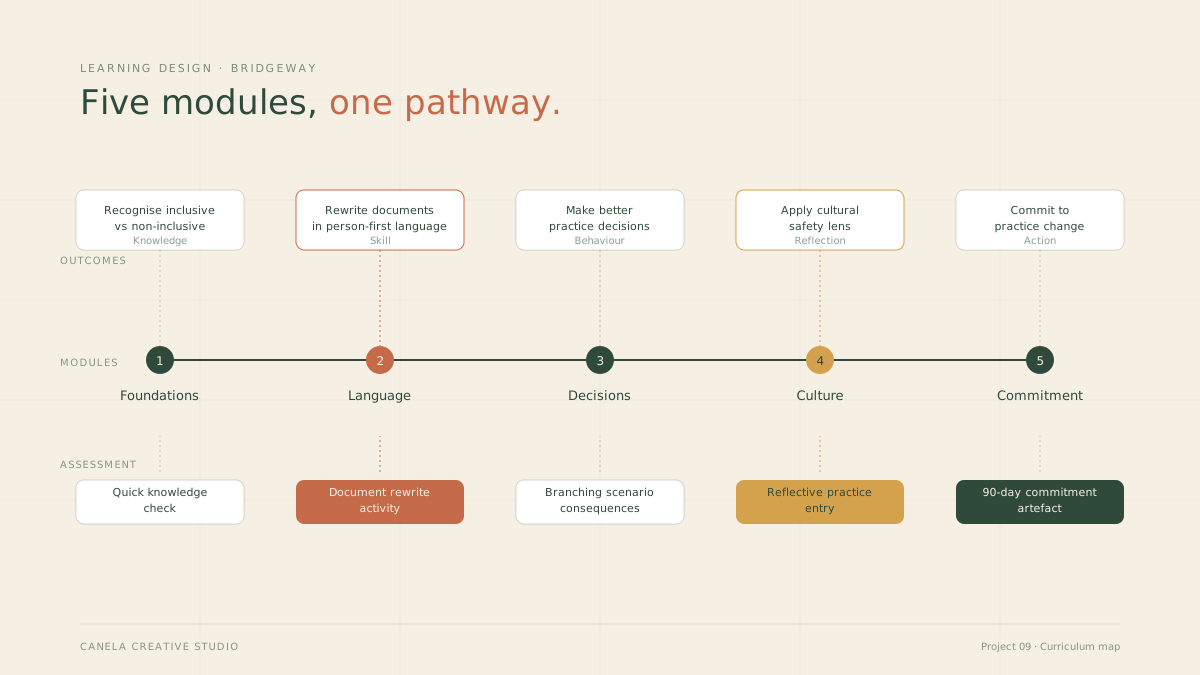
Bridgeway · Learning Design
One diagram. Three readers: the L&D team checking objectives, the executive approving the program, the learner understanding their journey. The map has to work for all of them without compromise.
Challenge
Most curriculum maps are built for designers and unreadable to everyone else. The executive needed to see the outcome logic; the L&D team needed the assessment mapping; the learner needed the journey.
Approach
A horizontal spine of modules with two swimlanes — outcomes above, assessments below. Every module visible at a glance; detail layered in for readers who want it.
Outcome
Signed off by the CEO in a single meeting. Later reused as a template across three other programs inside the organisation.
Tools: Figma · visual design system · learning design
Learning Design Process
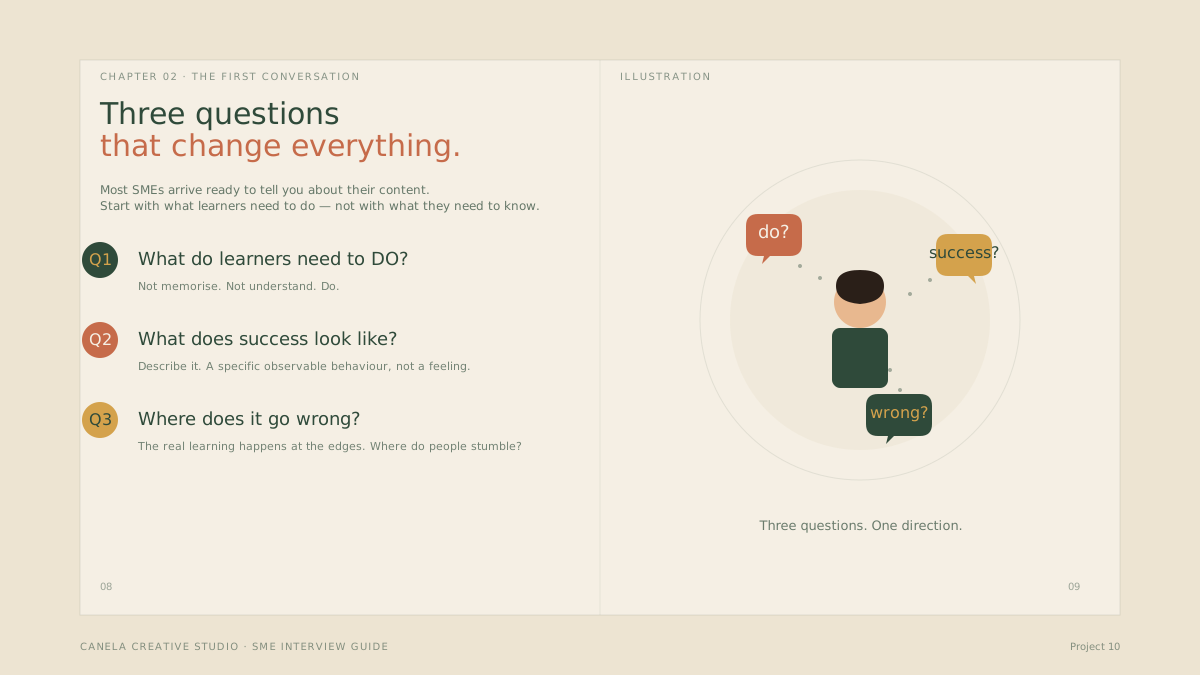
An illustrated interview guide for learning designers running first conversations with subject matter experts. Built around three questions that reliably surface outcomes — not content.
Challenge
Most SME interviews produce a content dump. Designers then spend weeks reverse-engineering objectives from information that was never structured for learning in the first place.
Approach
Three framing questions — What do they need to do? What does success look like? Where does it go wrong? — illustrated and paginated as a guide the designer can run through live with the expert.
Outcome
Currently used inside Canela's own design process and licensed to two internal L&D teams. Halves the distance between first conversation and first draft.
Tools: Figma · SVG illustration · learning design methodology
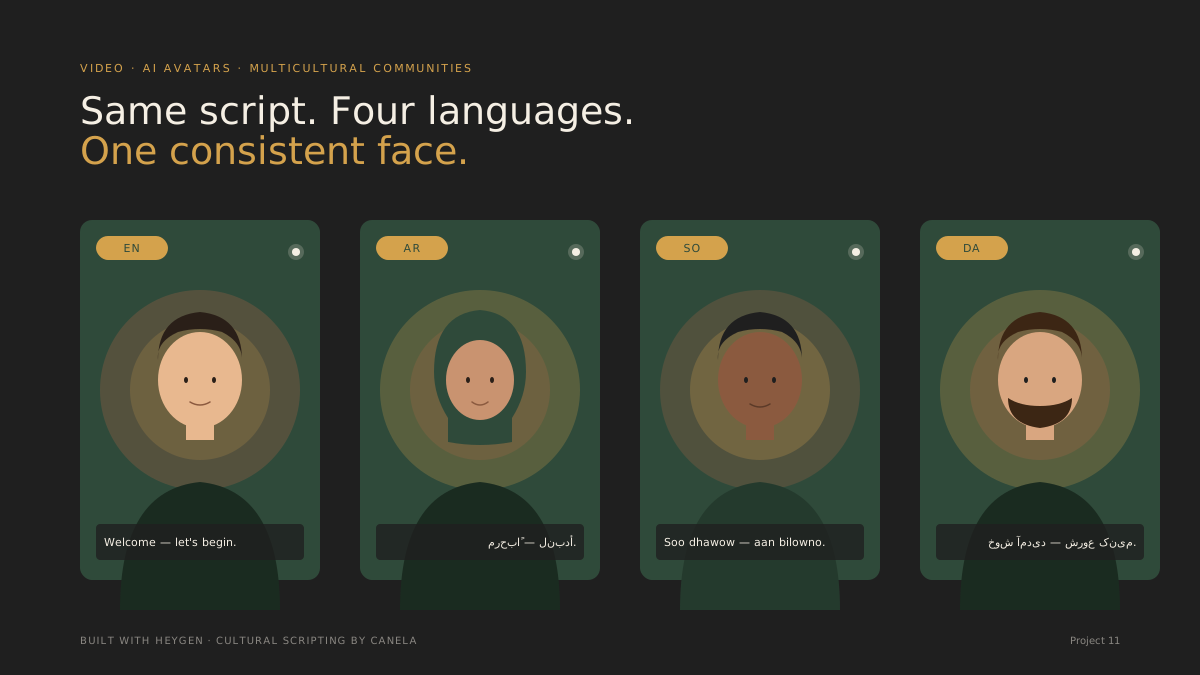
Video · AI Avatars · Multicultural Communities
A four-language training series using AI-generated avatars that mirror cultural cues in tone and pacing. Same core script, same presenter, four languages — at a fraction of the cost of full video production.
Challenge
The client had four language communities and a video production budget that wouldn't stretch to one language, let alone four. Text-only was inclusive on paper and exclusive in practice.
Approach
Scripts were rewritten for each language — not translated — with cultural scripting for tone, pacing and honorifics. Avatars were chosen for warmth rather than neutrality. Captions designed as a first-class citizen, not an afterthought.
Outcome
Completion rates across the four language groups were within four percentage points of each other. The cultural scripting process is now the studio's standard approach for multilingual avatar work.
Tools: HeyGen · cultural scripting · captions as primary layer
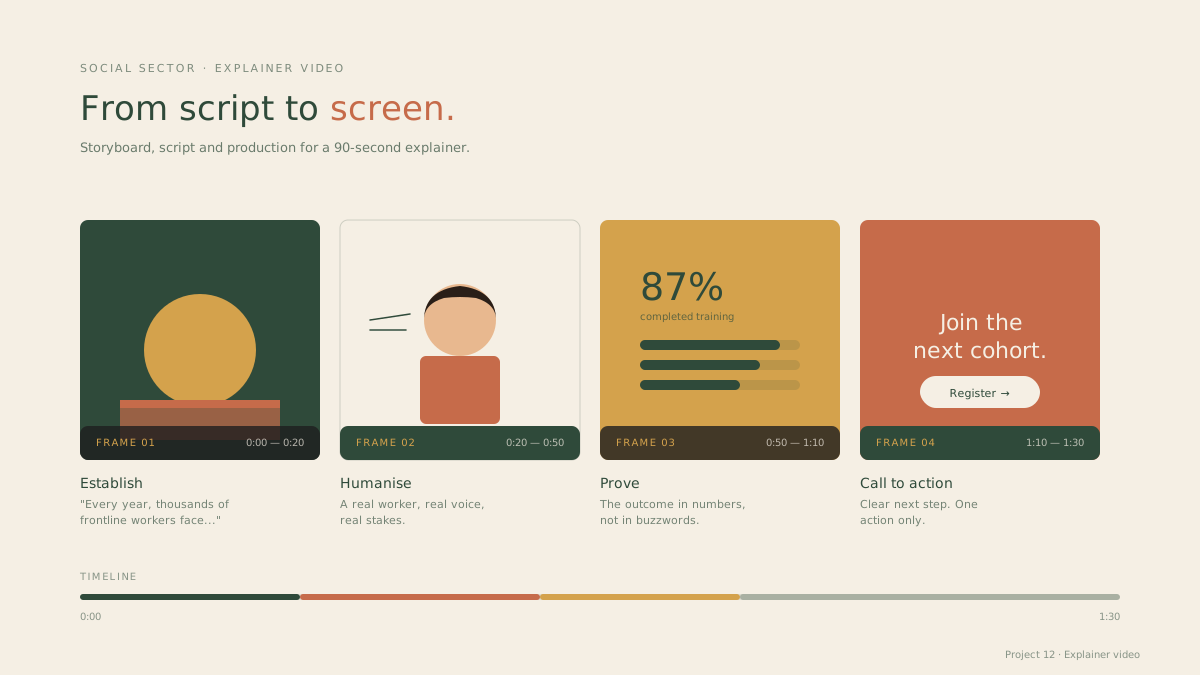
Social Sector · Explainer Video
Script, storyboard and production for a short explainer video — designed to work across social media, annual report launch, and training contexts. Accessible, clear, warm in tone.
Challenge
One asset, three audiences — funders, community, sector peers. Each needed a different pacing and emphasis, and the client couldn't afford three separate videos.
Approach
A four-frame structure — Establish, Humanise, Prove, Call to Action — that could hold across all three contexts. Script tested by reading aloud at three different speeds before animation.
Outcome
Used across LinkedIn, the annual report launch event, and new-staff onboarding — without recutting.
Tools: Script · Figma storyboard · After Effects
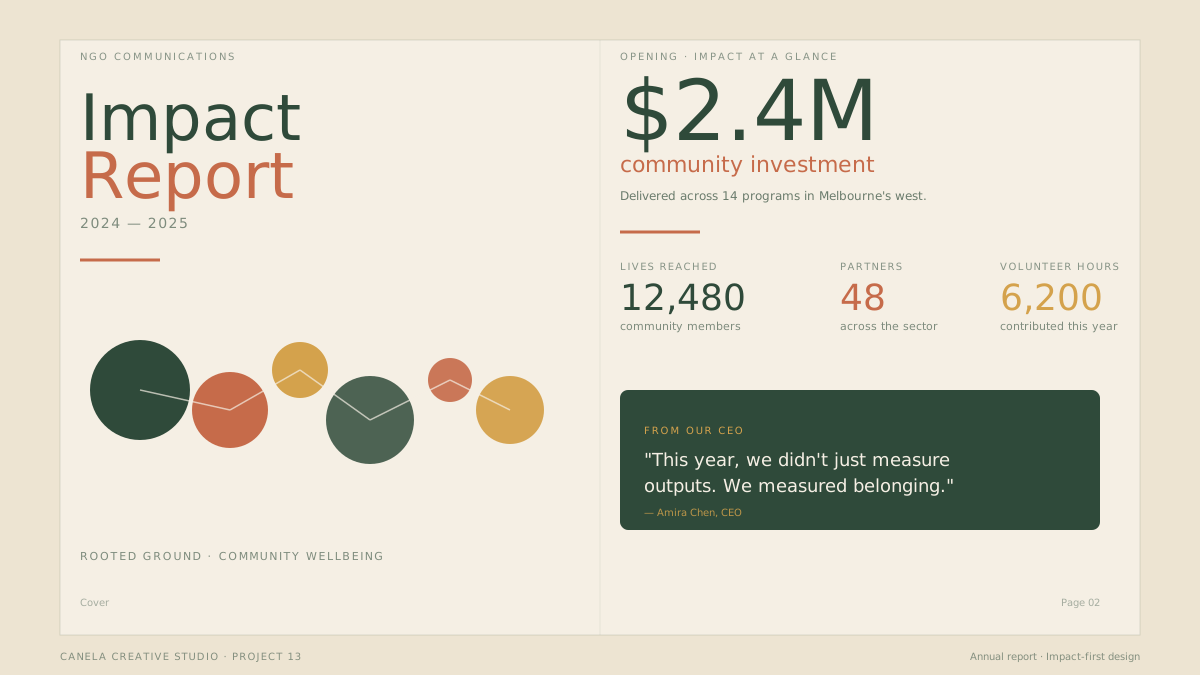
NGO Communications
An impact-led annual report for an NGO — visual-rich, story-led, Canela brand palette throughout. Designed to speak to funders, donors and community, not auditors.
Challenge
Most NGO annual reports read like compliance documents. The brief was to produce something a donor would actually finish reading — without losing the reporting rigour funders require.
Approach
Impact figures on the opening spread. CEO voice before governance detail. Compliance data in a clean appendix at the back — present but not dominant. Every page designed for scanning first, reading second.
Outcome
Shared at a donor event where three new major gifts followed in the weeks after. Board adopted the structure as the new annual template.
Tools: InDesign · Canela brand system · impact-first report structure
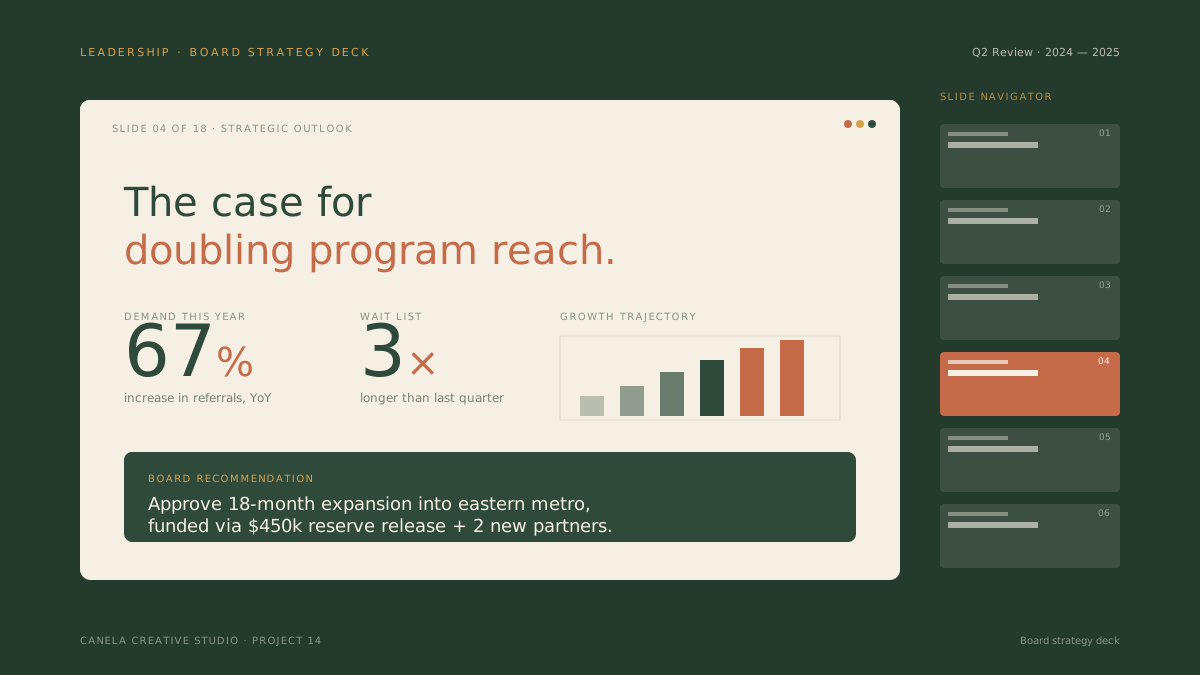
Leadership & Boards
A strategy presentation for a social sector CEO to take to their board — data-rich, visually disciplined, human in tone. Built for scanning first and reading second.
Challenge
Board decks in the social sector are either too dense to present from, or too thin to decide from. The CEO needed a deck that could hold both the evidence and the ask.
Approach
One clear decision per slide. Key figures elevated to display size. Every data slide paired with a plain-language takeaway that sits in a coloured strip — no board member can miss what they're being asked to consider.
Outcome
Strategy was approved at the first read-through, with the recommendation adopted in full. The CEO reused the template for the next quarter's update.
Tools: Google Slides · Canela brand system · board-communications frameworks
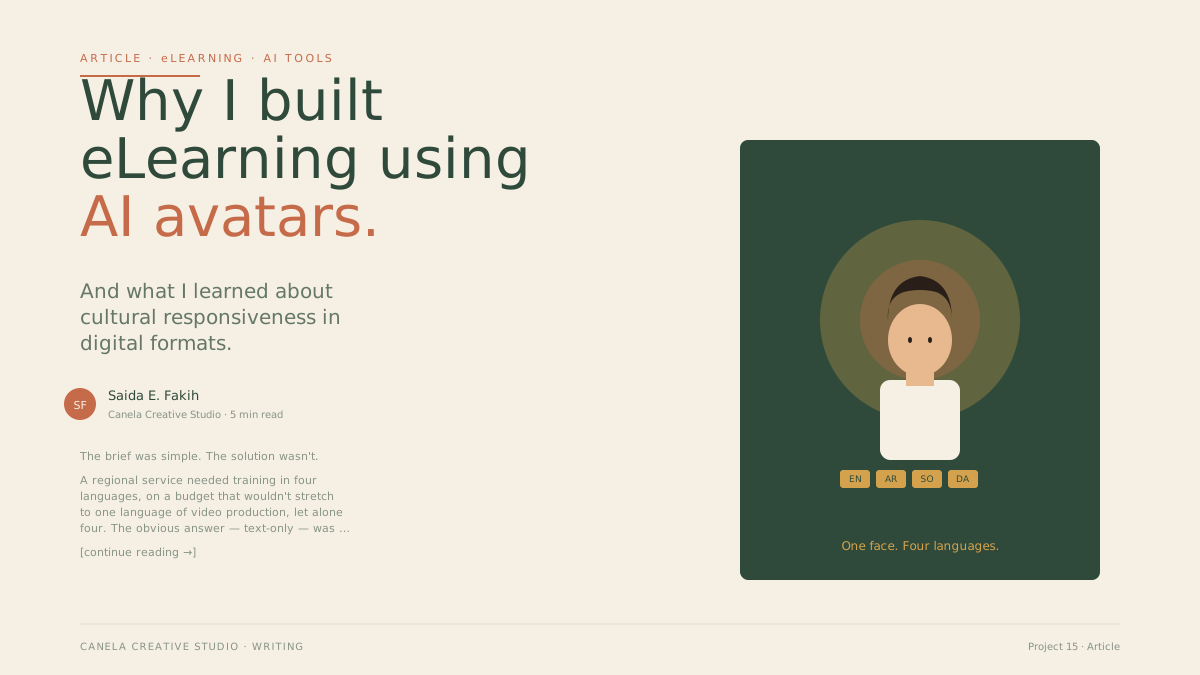
Article · eLearning · AI Tools
On the decision, the design logic, and what I learned about cultural responsiveness in digital formats. Five minutes.
What it covers
The client brief, why text-only was inclusive on paper and exclusive in practice, how we cast avatars for warmth rather than realism, and what the first learner feedback round taught us.
Who it's for
L&D leads weighing whether AI avatars belong anywhere near their training — and who've read enough vendor copy to distrust most of it.
Read time
5 minutes.
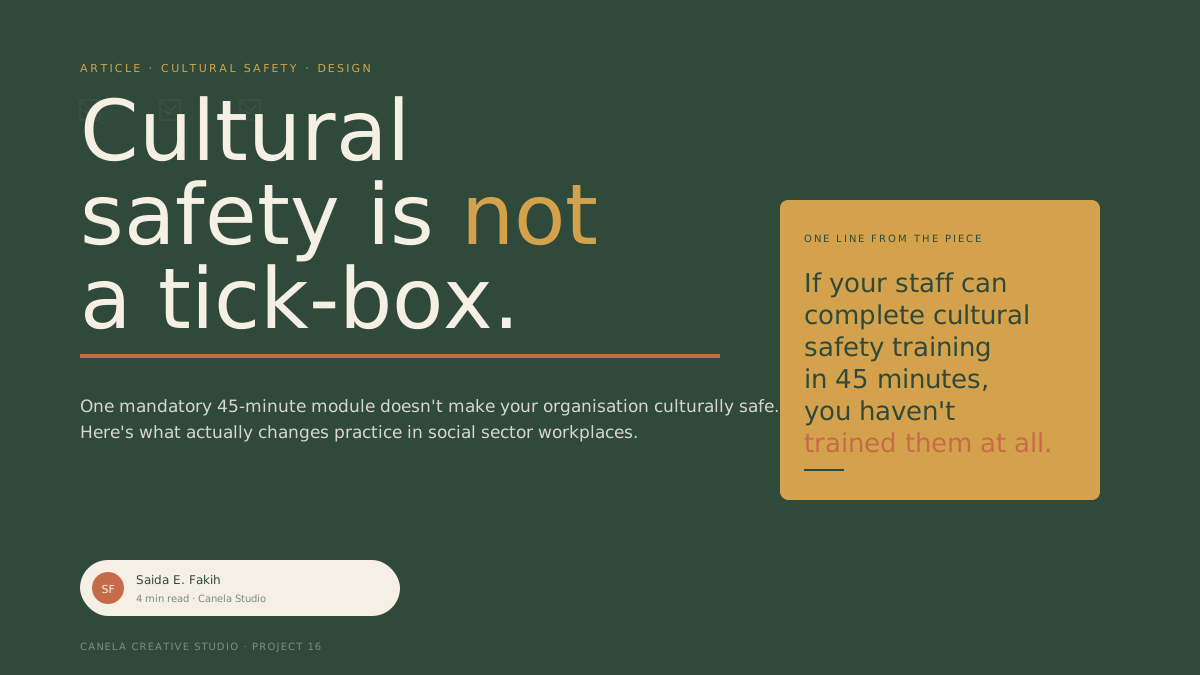
Article · Cultural Safety · Design
One mandatory 45-minute module doesn't make your organisation culturally safe. What actually changes practice — and why most training doesn't.
What it covers
The difference between compliance and capability, what the evidence actually says about one-off training, and four design principles that make cultural safety hold in practice.
Who it's for
People & Culture leads, L&D teams, and CEOs who've completed the "45-minute module" and still aren't sure anything changed.
Read time
4 minutes.
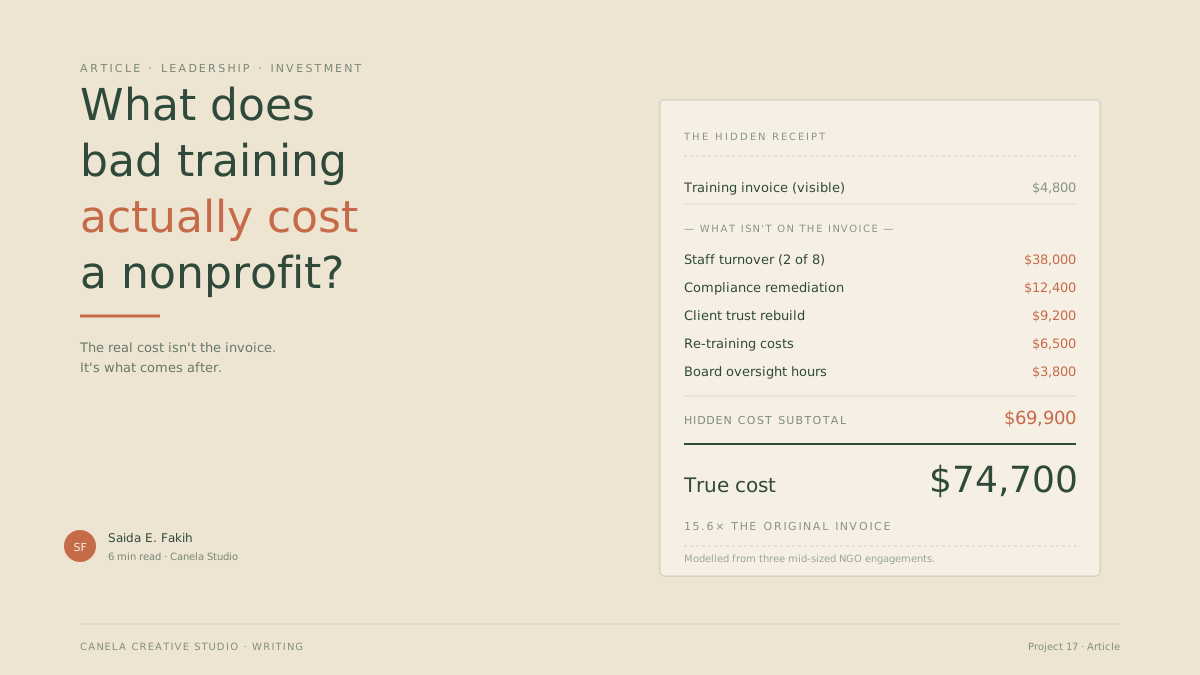
Article · Leadership · Investment
The real cost isn't the invoice. It's turnover, compliance failures, and communities poorly served. A practical framework for making the business case.
What it covers
A line-by-line "hidden receipt" for a single badly-designed training engagement — turnover, compliance remediation, client trust rebuild — modelled from three real NGO engagements.
Who it's for
Anyone who's had to defend a $6,000 training line in a budget meeting — and anyone who's been told "we'll just use free templates this year."
Read time
6 minutes.
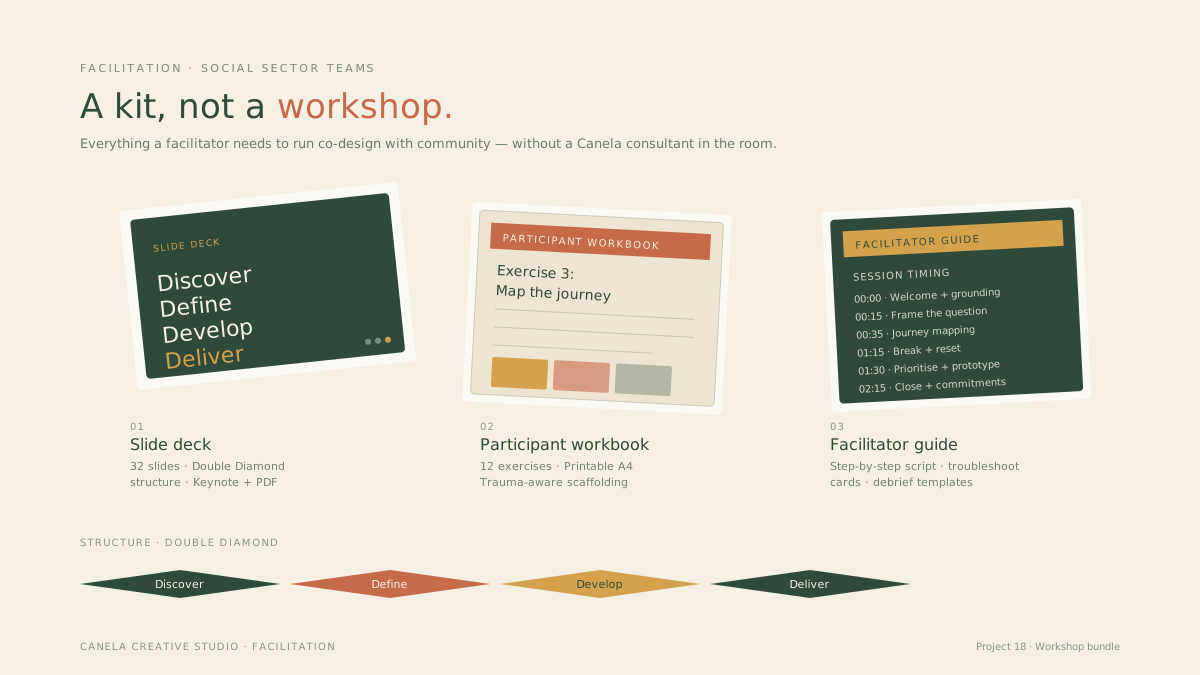
Facilitation · Social Sector Teams
Everything a facilitator needs to run co-design with community — slide deck, participant workbook, facilitator guide — without a Canela consultant in the room. Structured around the Double Diamond, trauma-aware throughout.
Challenge
Teams wanted to run co-design in-house, but off-the-shelf facilitation kits were either too corporate, not trauma-aware, or assumed a level of experience most internal facilitators don't have.
Approach
Three tightly-aligned artefacts. Slide deck for the group. Workbook for the participant. Facilitator guide with timing, troubleshoot cards, and debrief scripts. Every exercise has a trauma-aware opt-out.
Outcome
Used by two social sector teams so far — one delivering the full Double Diamond, one using only the Discover module to frame a strategy review.
Tools: Keynote · printable A4 workbook · facilitator guide · trauma-aware facilitation
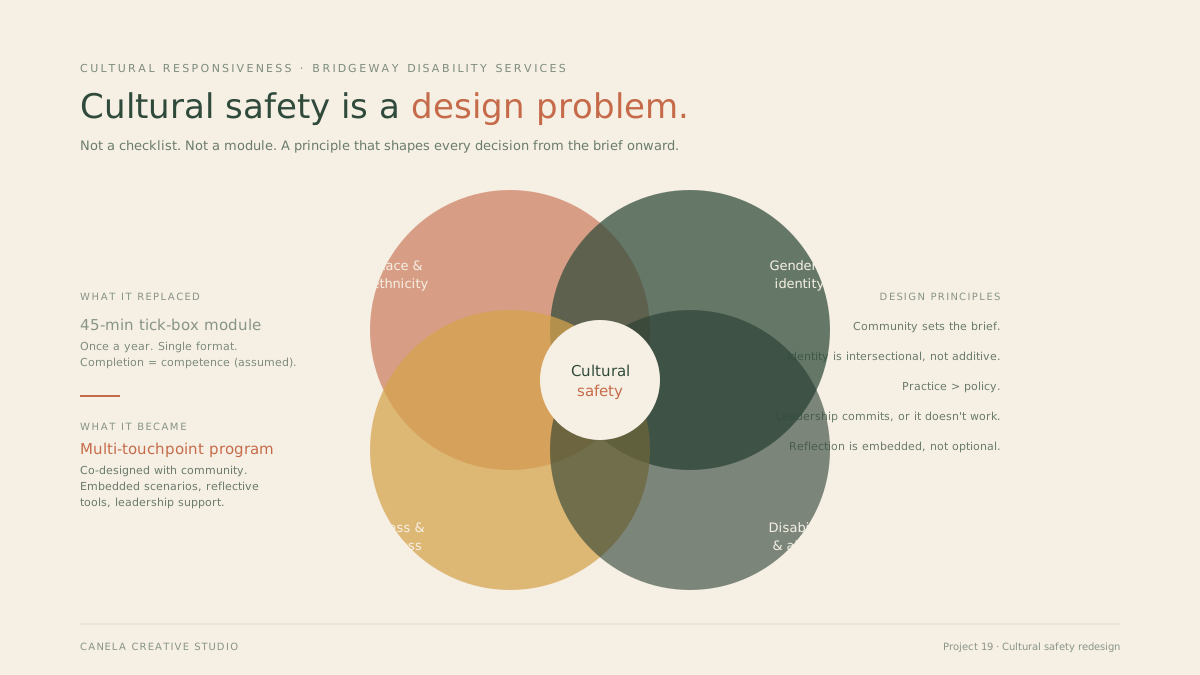
Cultural Responsiveness · Bridgeway
Replacing a 45-minute tick-box module with a multi-touchpoint program designed with community input — embedded scenarios, reflective practice tools, leadership support woven in from the start.
Challenge
The existing 45-minute module was compliant and ineffective. Completion didn't correlate with any observable practice change. The organisation knew it. Staff knew it. Nothing had shifted in three years.
Approach
Cultural safety reframed as intersectional — race, gender, class, ability — taught together rather than as separate checklists. Embedded scenarios, reflective practice tools, and explicit leadership commitments at every tier.
Outcome
First program the organisation has run where practice-change data was captured alongside completion data. Now forms the core of their cultural responsiveness strategy.
Tools: Articulate Rise · reflective practice design · community co-design sessions
Whether it's eLearning, an LMS migration, or building internal capability — let's talk about what you actually need.
Start a conversation → Back to home