 canela
 What culturally safe learning looks like in practice
Culturally safe learning is not a slide at the beginning of a workshop. It is the way a learning environment handles power, pace, language, uncertainty and repair.
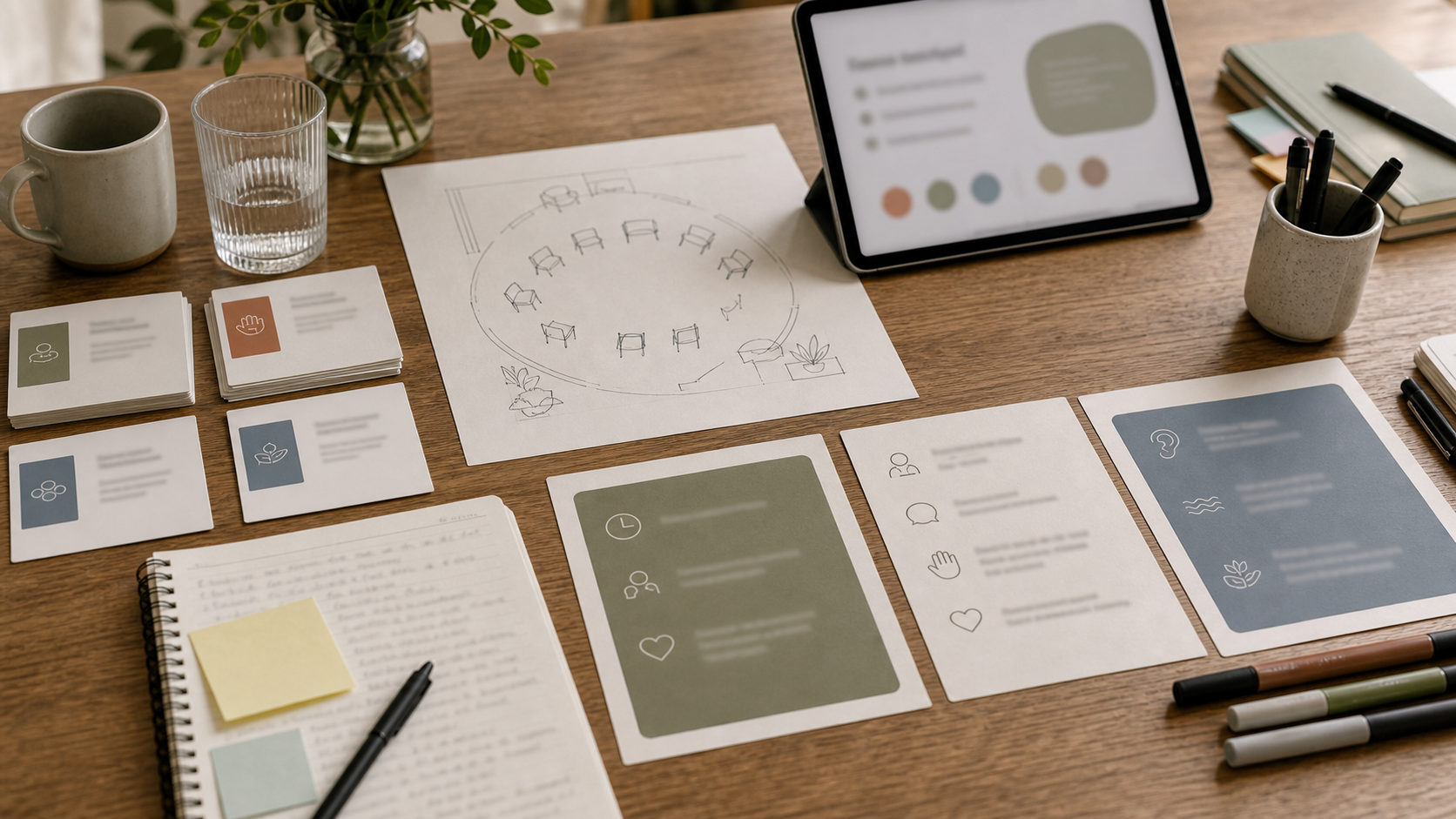
In practice, culturally safe learning means designing for more than content transfer. It means asking who is expected to adapt, whose knowledge is treated as evidence, and what happens when a conversation becomes difficult.
The question is not whether participants feel comfortable. It is whether they feel safe enough to be honest.
Environment comes first. Not the physical room — though that matters — but the relational environment. Who facilitated this? Who was consulted in the design? Who is absent from the table, and does the content acknowledge their absence? These questions are visible to participants even when they are never spoken aloud.
Language is the second layer. Culturally safe learning does not default to the dominant group's vocabulary and expect everyone else to translate. It builds in multiple entry points: plain language, translated materials where needed, and explicit invitations for people to name the terms that don't fit their experience.
Pacing is often where cultural safety breaks down in practice. Institutional learning tends to compress. Real cultural safety requires time — time to sit with discomfort, time for people to locate themselves in the material, time for questions that don't yet have language. A facilitator with a slide deck to finish is not running a culturally safe space. They are running a curriculum.
Repair is the capacity most organisations don't build. When something goes wrong in the room — a harmful assumption surfaces, a participant is inadvertently erased, the facilitator gets something wrong — what happens next? Culturally safe learning has a practice of repair. It names what happened, acknowledges the impact, and keeps going. Not as performance. As accountability.
Canela approaches cultural safety as a methodology: listen first, make assumptions visible, build room for multiple ways of knowing, and leave facilitators with tools for reflection rather than scripts for control.