What I actually learned about AI fluency
I spent a few hours inside Anthropic's AI Fluency course. Here's what stuck, what I disagree with, and what our sector still needs to build on top.
I'll be honest. I was sceptical before I started.
Most "AI literacy" content I come across is either terrifying ("your job will vanish in six months") or useless ("here are 47 prompts for LinkedIn"). There's very little that takes the technology seriously as a design problem. So when I began working through Anthropic's AI Fluency course, I wasn't expecting much.
I was wrong. It's genuinely useful. It's also incomplete for the kind of work we do in the social sector — and I want to talk about both.
This essay is a few things at once. It's my notes from the course. It's a critique of where the framework starts to strain under real conditions. And it's the beginning of a bigger argument I've been circling for a while: that AI fluency is not a tech skill. It's a design discipline. And the people best placed to lead it in nonprofits aren't IT teams. They're facilitators, learning designers, and practitioners.
The framework, in one breath
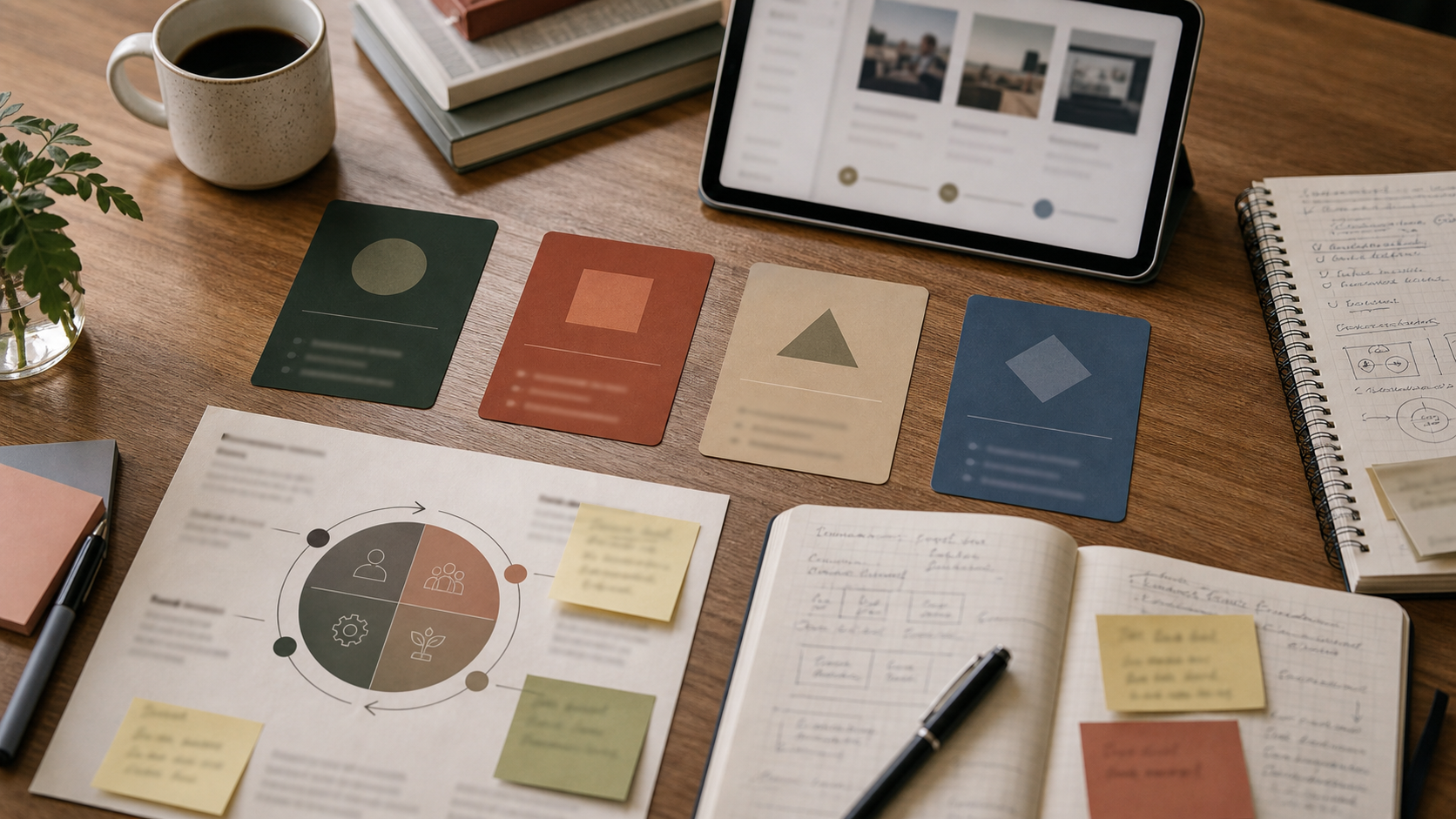
The course organises AI fluency into four competencies — the 4Ds — arranged in two feedback loops.
The first loop, Delegation and Diligence, is strategic. Should AI even be doing this work? What are you willing to put your name to?
The second loop, Description and Discernment, is operational. How do you brief it, and how do you judge what comes back?
If you only take one thing from this post, take this: most people I train are obsessed with the second loop and neglect the first. They want better prompts. What they actually need is better decisions about when to use AI at all.
Delegation is a decision you're already making
Delegation is deciding which work belongs to humans and which can go to AI. Sounds obvious. Isn't.
Here's what I notice in almost every organisation I work with. People aren't deciding what to delegate. They're defaulting. Half the team is quietly feeding everything into ChatGPT because they're drowning. The other half is refusing to touch it because they're nervous. Neither is a strategy. Both are fear dressed up as a position.
The question that reframed this for me is almost painfully simple: what is this work actually for?
If I'm writing a funding report, the work is partly the report and partly the thinking that happens while I write. Delegate the draft and I might save three hours and lose the clarity I would've arrived at through the writing itself. Bad trade.
But if I'm writing the fifth variation of a program description for different audiences — the thinking is already done. The work is just shape-shifting. Delegation is a gift.
The real question isn't "is this ethical to automate." It's "what do I lose if I skip the doing of it?"
Some work is the thinking. Some work is just the execution of thinking you've already finished. Learning the difference is the whole game.
Diligence is where the sector lives or dies
Diligence is taking responsibility for how you use AI. Being deliberate about your tools. Being transparent about AI's role. Verifying what goes out with your name on it.
In the nonprofit sector this is not a compliance checkbox. It's a credibility event waiting to happen.
A hallucinated statistic in a grant application is not an honest mistake — it's the kind of thing that loses you a funder permanently. An AI-generated case study that reads as real is a dignity violation in slow motion. A culturally wrong translation in a client-facing resource doesn't just embarrass you. It tells migrant and refugee communities, yet again, that the sector couldn't be bothered to get them right.
The test I use now, and I think everyone in our sector should: can I stand behind every sentence that goes out under my name? If the answer is anything other than yes, it doesn't go out.
Description: AI is a collaborator who needs a brief
Description is how you talk to AI. The course splits it into three: what you want (the output), how you want it approached (the process), and how you want it to behave while working with you (the performance).
Most people describe the output. They skip the other two. Then they wonder why the result sounds like a LinkedIn post written by a committee.
Here's a before-and-after from my own work.
Look at the second one again. Notice what's in there. Pedagogical framework. Trauma-informed principles. Audience specificity. Explicit constraints on what not to do.
This is not a prompt. It's a creative brief. If you've ever briefed a designer, a copywriter, or a contractor, you already know how to do this. You're just doing it in a new context.
Which is my point, really. AI fluency is not a new skill. It's an old skill — instructional design craft, brief-writing discipline, editorial judgement — applied to a new collaborator.
Discernment: the atrophied muscle
Discernment is evaluating what AI gives you. The product (is it right?). The process (did it reason soundly?). The performance (did it behave the way it should in this context?).
This is the competency I see atrophying fastest, and it worries me. Fluent prose is seductive. Well-structured paragraphs bypass a huge amount of critical reading. You read something, it sounds right, you nod, you move on. That's the whole pattern. Multiply it across a team of twenty and you've got an organisation publishing confident nonsense at scale.
The hack I've adopted: I read AI output as if it were written by someone I don't trust yet. Not hostile. Just not yet trusted. Every claim has to earn its place. Every piece of framing has to justify itself. It's slower. It's also the only way I've found to stay honest.
Where the framework strains: the cultural lens
Now the harder part.
The 4Ds are excellent as a general framework. They're also designed for a general audience, which means they're incomplete for work involving cultural safety, lived experience, and communities who have been extracted from for generations.
I want to be specific about this, because vague critiques of AI aren't useful. Here's what shifts, concretely, when you bring a cultural lens to each of the four competencies.
I'll say the part that's often left quiet. When you delegate the drafting of a resource for refugee women to a system trained predominantly on Western English-language text, you are not making a neutral choice. You are making an editorial one. The system has a voice. That voice has a politics. Pretending otherwise is the mistake.
Which doesn't mean don't use it. It means use it the way you'd use any other tool that's powerful and not neutral: deliberately, with community in the room, with your eyes open.
If you're starting from zero, here's where I'd begin
I'll resist giving you a 10-step framework because I don't believe them. Instead, three things, in order.
Start with delegation, not description. Most people rush to learn prompting. Get clearer on what you should and shouldn't use AI for before you get good at using it. The prompts are the easy bit. The decisions are the hard bit.
Build your diligence habits before you scale your use. Decide now — and write it down — what you will always verify, what you will always disclose, and what you will never delegate. Retroactive ethics are a nightmare. Upstream ethics are a discipline.
Treat description and discernment as design craft, not technical skill. You already have these muscles. You use them every time you brief a contractor or review a draft. Bring the same rigour you'd bring to any other creative direction.
The closing argument
The version of AI fluency our sector needs is not a lighter version of what tech companies teach. It's a heavier one.
We carry more responsibility per decision. More sensitivity per word. More long-term consequence per piece of published work than most industries I can name. That's not a reason to move slowly out of fear. It's a reason to move deliberately, with a framework sturdy enough to hold what we're trying to do.
The 4Ds are a good starting point. But they're a starting point. The real work is extending them — with cultural knowledge, with community, with the kind of care our clients have always deserved and too often not received.
That extension isn't someone else's job. It's ours.